Navigating the world of high-stakes play in the United Kingdom requires more than just a sharp eye for the cards; it demands an intimate understanding of the regulatory architecture and the service levels expected at the highest tier. When you are wagering sums that move the needle, the standard high-street offerings often feel restrictive, pushing discerning players toward platforms that respect both the gravity of the stake and the necessity of seamless liquidity. The British market remains one of the most sophisticated globally, governed by the Gambling Act 2005, which ensures that every spin and every hand is backed by a framework designed for integrity and player protection.
Securing a position at a table where the limits are meaningful is the primary goal for any serious punter. In Great Britain, the Gambling Commission oversees remote gambling, ensuring that whether you are playing via a mobile device or a dedicated desktop suite, the software is audited and the payouts are guaranteed by law. For those who demand a bespoke experience, finding a jettbet casino environment often means looking for operators that balance these strict UKGC requirements with the agility to process significant transactions without the friction typical of entry-level sites.
Adopting a high-roller mindset involves scrutinising the fine print of withdrawal ceilings and the speed of VIP desk responses. While the general public might be satisfied with modest daily limits, the elite player requires a direct line to account managers who understand that time is as valuable as the capital being deployed. In the United Kingdom, this level of service is framed by mandatory affordability checks and GamStop self-exclusion protocols, which are standard across the industry to maintain a sustainable and responsible environment for all participants.
Understanding the regulatory framework of the Gambling Commission
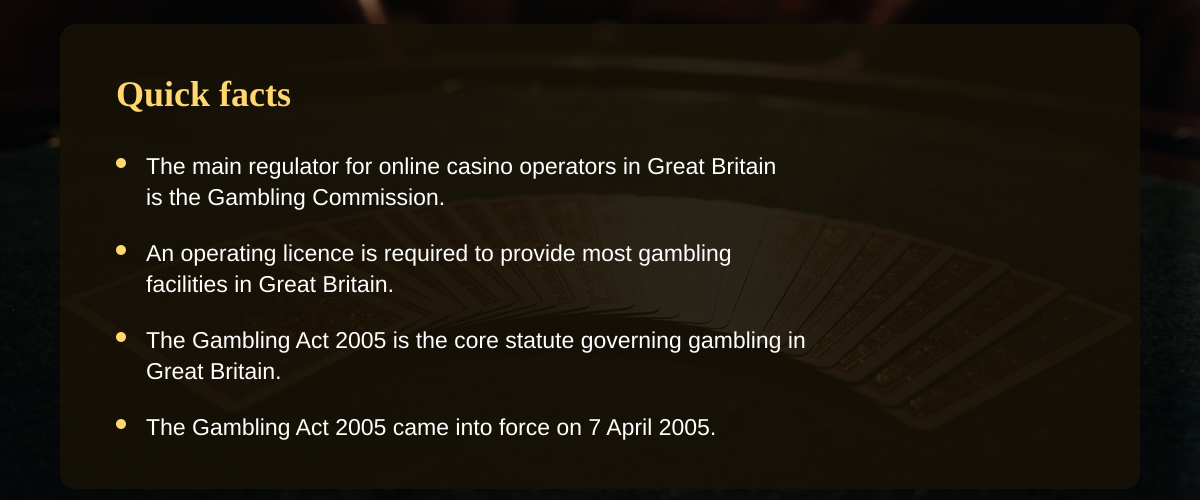
Operating within Great Britain requires a deep respect for the Gambling Commission, the primary regulator established to ensure that gambling is fair, open, and free from crime. The Gambling Act 2005, which came into force on 7 April 2005, serves as the core statute, and it remains up to date with all changes known to be in force through August 2026. This legislation defines a casino as any arrangement where individuals can participate in casino games, including those conducted via remote communication such as the internet. For a high-stakes player, this means that the legal protections afforded to you are robust, regardless of whether the operator is physically based in London or halfway across the globe, provided they serve the British market.
Remote gambling, a term the regulator uses to describe online and phone-based play, is strictly licensed to protect the consumer. The Commission regulates facilities that use British-based equipment as well as those where the key equipment is located anywhere else in the world, as long as the products are offered to consumers in Great Britain. This comprehensive reach ensures that your favourite games, from high-limit blackjack to the latest online slot games, are governed by the same rigorous standards of software fairness. It provides a level of comfort when moving large sums of GBP (£) through the banking system, knowing that the operator is bound by licence conditions and codes of practice.
Maintaining an elite status in the British market also means navigating the prohibition on credit in connection with non-remote gambling. While the UK government banned the use of credit cards for all gambling activities to promote responsibility, the use of debit cards, PayPal, and Apple Pay remains the standard for secure, rapid transactions. The regulator also oversees personal gambling licences for individuals in key management roles and operating licences for the businesses themselves, ensuring that the people behind the platform are as vetted as the technology they provide. You can always verify these credentials using the Commission’s public register, a tool that separates the legitimate market leaders from the peripheral actors.
Evaluating withdrawal limits and liquidity for high-stakes players
Demanding high liquidity is a prerequisite for any player whose average stake exceeds the typical weekly deposit of a casual punter. In the broader market, many operators impose restrictive daily or weekly withdrawal caps that can be frustrating when you have secured a significant win on the horse racing markets or at the baccarat table. A true high-roller service distinguishes itself by offering bespoke withdrawal limits that reflect the player's turnover and standing. While a standard account might be capped at a few thousand pounds per transaction, premium accounts often enjoy five-figure daily limits, provided that the necessary source of wealth and affordability checks have been satisfied.
Processing these large sums requires a sophisticated banking backend that integrates seamlessly with British financial institutions. Debit cards remain the most reliable method for moving significant capital, though the speed of PayPal and the privacy of Apple Pay are increasingly favoured for their efficiency. When you are dealing with large-scale payouts, the speed of internal processing becomes the defining metric of quality. The best operators in the United Kingdom do not sit on funds for days; they move them with the same urgency that the player displayed when placing the bet.
Comparing the British market to international jurisdictions reveals a high level of transparency regarding these limits. While some offshore sites might bury their withdrawal terms in obscure sub-clauses, UK-licensed entities are required to be clear about how and when a player can access their winnings. This transparency is vital when you are managing a large bankroll. It allows for precise financial planning and ensures that your capital is never locked behind arbitrary administrative walls. The peace of mind that comes from knowing your GBP (£) is held in segregated accounts, as required by the regulator, cannot be overstated.
Analysing the impact of new technical standards on gameplay
Observing the evolution of game mechanics is essential for anyone who values the rhythm and flow of a high-stakes session. The Gambling Commission has introduced specific rules for online gambling products to enhance player safety, which directly affect the user interface. From 17 January 2025, a minimum five-second game cycle applies to relevant online casino products, effectively standardising the pace of play. This change, along with the prohibition of autoplay features, requires a more engaged and deliberate approach to every round, which many experienced players find actually improves their focus and decision-making process.
Eliminating speed features like turbos and slam stops is another significant shift in the British landscape. These tools were once used to bypass animations and reach the result faster, but their removal ensures a more transparent and consistent experience. Similarly, the prohibition of simultaneous multi-product play means that a player cannot run multiple slot games or different casino products at the exact same time. For the high-stakes punter, this focus on a single stream of play allows for a more immersive and controlled environment, where the nuances of a specific game can be fully appreciated.
Prohibiting celebrations for returns that are equal to or less than the stake is perhaps one of the most subtle but impactful changes. This ensures that the psychological feedback provided by the game remains grounded in financial reality. When you hit a win that doesn't actually cover the cost of the spin, the software will no longer trigger the grand visual and auditory displays once common in the industry. This level of honesty in game design is a hallmark of the British regulatory approach, fostering a more professional atmosphere for those who treat gambling with the seriousness it deserves.
Comparing VIP services in the United Kingdom to global standards
Receiving VIP treatment in the UK market is a distinct experience compared to the high-volume, low-regulation environments found elsewhere. British operators must balance luxury service with the strict requirements of the Gambling Act 2005 and subsequent updates. This means that while you may be assigned a dedicated account manager and receive invitations to prestigious horse racing events or football matches in private boxes, the operator is also legally bound to monitor your play for signs of financial distress. This dual role of concierge and guardian is unique to the British Isles and represents a more sustainable model of high-end gambling.
Accessing exclusive tables with higher betting ceilings is the most tangible benefit of a premium account. In the live casino environment, this often translates to private rooms where the interaction with the dealer is more personal and the pace of the game is tailored to your preference. Unlike the crowded public tables, these VIP suites offer a level of discretion and quiet that is essential for high-concentration play. The quality of the video stream, the professionality of the croupiers, and the lack of lag are all prioritised for the high-stakes segment, ensuring that the digital experience matches the standards of a top-tier Mayfair establishment.
Managing expectations around bonuses and incentives also requires a nuanced understanding of the local market. In Great Britain, winnings from gambling are generally not subject to a separate tax for the player, which is a significant advantage over many other jurisdictions. This means that the value you see on the screen is the value you take home. Operators pay their own taxes to the government, allowing the player to focus purely on the strategy and the stakes. When compared to markets where winnings are heavily taxed at the source, the British system offers much better net value for the high-roller.
Navigating affordability checks and responsible gambling protocols
Submitting to affordability checks is now a standard part of the high-stakes journey in the United Kingdom. While some may view this as an intrusion, it is the mechanism that allows for the continued existence of high limits in a regulated market. The Gambling Commission requires licensees to ensure that their customers are gambling within their means, which often involves a one-time verification of income or wealth for those playing at the highest levels. Once this threshold is crossed and the documentation is approved, the relationship between the player and the operator typically becomes much smoother, with fewer interruptions for routine monitoring.
Participating in the GamStop self-exclusion scheme is another pillar of the British approach. This centralised system allows players to exclude themselves from all UK-licensed gambling sites with a single action. For the high-stakes community, the existence of such robust safety nets adds to the overall credibility of the industry. It ensures that the market remains healthy and that the operators are focused on providing a premium service to those who can afford the risks involved. This focus on responsibility does not diminish the excitement of the game; rather, it provides a stable foundation upon which high-level play can thrive.
Integrating these checks into the VIP experience is where the best operators truly shine. Instead of a cold, automated request for documents, a premium service provider will handle these requirements through a dedicated account manager who understands the player's background. This personalised touch makes the administrative side of gambling feel like a part of the professional service rather than a hurdle. It reflects a level of respect for the player's time and status, ensuring that the focus remains on the high-quality gaming and sports betting that the British market is famous for!
Advancing your strategy in a regulated and secure environment
Executing a successful high-stakes strategy requires a stable environment where the rules are clear and the payouts are certain. The Gambling Commission’s oversight of poker, roulette, blackjack, and online slot games means that the mathematical integrity of every bet is guaranteed. In the United Kingdom, you are not just playing against the house; you are playing within a system that is constantly audited by third-party agencies and government bodies. This security allows you to deploy complex strategies and large sums of capital with the confidence that the results are genuinely random and the house will honour its debts.
Optimising your choice of payment methods is also a key part of the modern British gambling strategy. While Paysafecard offers a layer of anonymity for smaller transactions, the high-roller will almost always lean toward debit cards and PayPal for their high transaction limits and robust consumer protections. The speed of these methods in the UK is among the best in the world, with many banks now supporting instant transfers that allow winnings to reach your account in minutes rather than days. This level of liquidity is a powerful tool in the hands of a disciplined player.
Concluding your search for the perfect gaming environment in Great Britain involves looking beyond the surface-level glitz and focusing on the structural quality of the operator. The best platforms are those that embrace the spirit of the UKGC regulations while still providing the high ceilings and bespoke service that the elite player demands. By understanding the law, respecting the protocols of responsible gambling, and choosing partners who value your business, you can enjoy a world-class casino experience that is as secure as it is exhilarating. The British market offers a unique blend of tradition and innovation that continues to set the gold standard for high-stakes play worldwide!